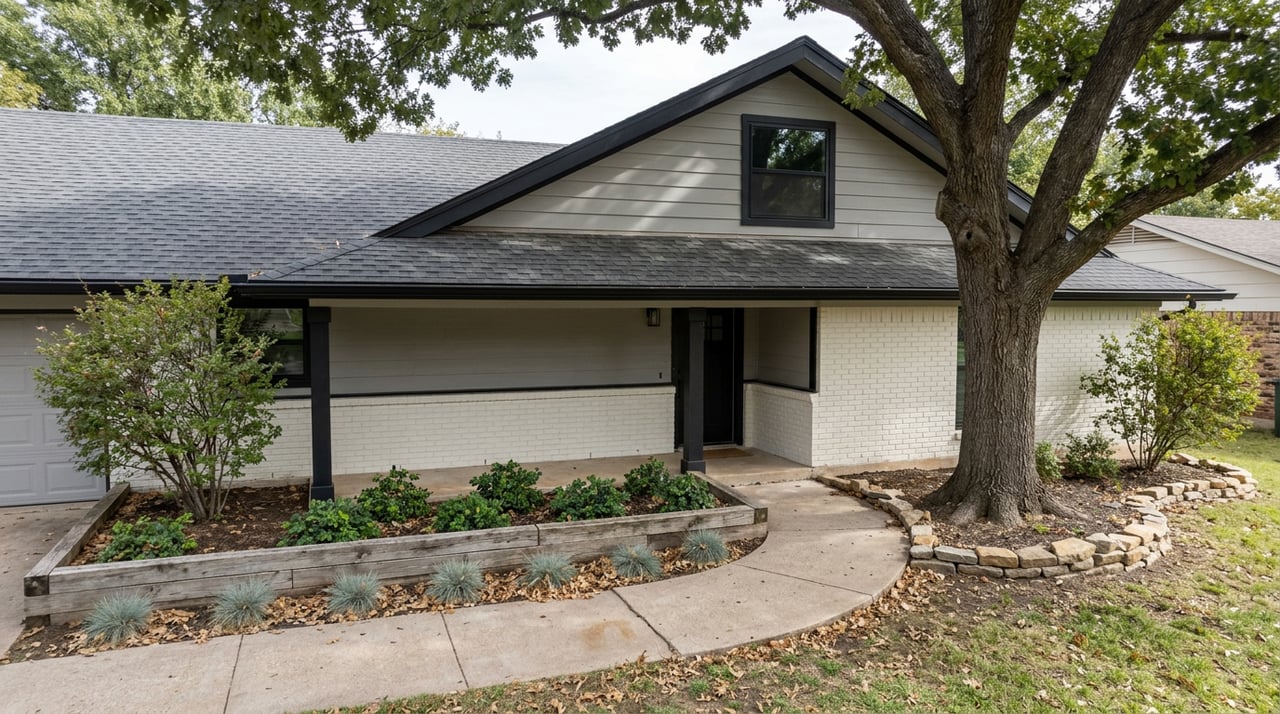
Walk down Collyer Street on a summer evening and the canopy does most of the talking. Century-old maples and elms lean over the sidewalk, porches sit a few feet back from the curb, and a few blocks east you can smell whatever Jefe's Tacos and Tequila has going on the grill. This is Old Town Longmont, split by Main Street into the Historic Eastside and Historic Westside, two districts added to the National Register of Historic Places in 1986 and 1987. The Eastside holds 67 of these homes south of Longs Peak Avenue. The Westside, running roughly from 3rd Avenue to 9th and from Main west to Bowen, holds 118 more, a mix of Craftsman bungalows, American Foursquares, and Edwardian vernacular houses. Together the two districts preserve architecture dating from the 1870s through the 1940s.
It is a genuinely pleasant place to own a house. It is also, underneath the sidewalk, a neighborhood where the thing that makes it beautiful is the same thing that puts stress on a part of the house nobody ever walks through on a showing.
What the trees are doing that you can't see
The sewer lateral, the pipe that runs from the house to the city's main line in the street, is the homeowner's responsibility for its entire length. The City of Longmont maintains the main line and defines the service line as everything between the house and that connection, owned and maintained by the property owner. Nobody opens a listing photo of it. No buyer walks it during a tour. And in a neighborhood built out mostly before 1950, it has had eighty to more than a hundred and fifty years to develop problems that only show up on camera.
Local inspectors who work Boulder, Longmont, and Loveland point to three specific failure modes that show up disproportionately in older, tree-lined neighborhoods like this one. Mature roots find their way into pipe joints and grow until the line clogs or collapses, which is the direct cost of the same shade that makes these streets desirable. Front Range expansive soils cause bellies and offsets, low spots where waste collects and joints where the pipe has shifted apart. And material itself can be the problem: older homes may still have clay tile lines prone to cracking, or Orangeburg pipe, a tar paper product used in mid-century construction that deforms and fails as it ages. One local inspector recommends a scope on nearly every home over 20 years old, any home with mature trees between the house and the street, or any home where a seller mentions past drain cleaning. Every home in Old Town Longmont checks at least two of those three boxes before you've toured the kitchen.
The disclosure form was never built to catch this
Here is the part that surprises most sellers. Colorado's Seller's Property Disclosure form, the SPD19 version that Colorado brokers use for contracts written on or after January 1, 2026, only requires a seller to report what they actually know as of the date they sign it. Colorado's disclosure forms have long made clear that a seller has no obligation to go investigate or inspect the property before filling one out, and that the form itself is not meant to replace an actual inspection.
That is a reasonable rule for most of a house. A seller who has lived somewhere for a decade knows if the roof leaks or the basement floods. But a sewer lateral is buried three to six feet underground and runs the length of the yard. Unless it has already backed up into the house, a seller can own a home for years with a slowly collapsing lateral and never know it, and the disclosure form does not ask them to find out. The form asks about the type of sewer or septic service, not its condition. That gap is not a loophole. It is a structural fact about how the form works, and it means the standard disclosure process cannot protect either side on this specific issue.
Buyers usually get a 7 to 10 day period to review disclosures and inspection results before deciding how to proceed. If a scope happens during that window and turns up a collapsed section of clay tile under a hundred-year-old maple, the seller is negotiating from a position they didn't choose. If it happens after closing, there is no negotiation left to have.
What a scope actually costs against what it protects
This is where the math gets easy. A standalone sewer scope inspection in Longmont runs roughly $200 to $240 as of 2026, more if the run from house to street is unusually long. A lateral repair or replacement, once it requires excavating the yard or the street, commonly runs from a few thousand dollars into the tens of thousands. One local estimate from an inspector puts the average cost of repairing undetected sewer damage at $7,500. Another Front Range inspection company quotes a typical replacement range of $4,000 to $15,000. The exact number depends on pipe length, depth, and access, but the shape of the comparison holds across every source: the scope costs a small fraction of what the repair could cost, and it is the only way to know which number you're actually facing.
A pre-listing scope changes who holds the leverage. Findings before you sign a contract become information you control: you can repair the line, price the home to reflect it, or disclose it up front and let the market price it fairly. Findings that surface during the buyer's inspection period become a negotiation you're reacting to, on their timeline, with the deal already partly built around a number that no longer holds.
Who this actually applies to
This is not a warning specific to one street. It applies to any Longmont home with mature trees between the house and the curb, any home over 20 years old, and any home where a seller recalls a drain that's needed clearing before. But Old Town Longmont is close to a worst case by design. Homes here were largely built before 1950, the trees that shade Thompson Park and line Collyer and Terry Streets are the same age or older than the pipes underneath them, and the historic district designation means these houses aren't going anywhere or getting torn down for a fresh sewer tap. If you own one of these homes and you're thinking about listing, the question isn't whether the lateral has aged. It's whether you find out on your terms or the buyer's.
A few signs worth taking seriously before you list:
- Slow drains or gurgling in more than one fixture, especially after heavy rain or snowmelt
- Unusually lush or soggy patches in the yard along the likely path of the lateral
- Any past service call for a "clog" that a plumber cleared without explaining why it happened
- A home built before 1970 with large trees between the foundation and the street
A few questions Old Town Longmont sellers ask
Is a sewer scope legally required to sell a home in Colorado? No. Colorado does not require a point-of-sale sewer inspection the way some cities in other states do. The Seller's Property Disclosure only requires reporting what you actually know, and it does not obligate you to investigate the lateral's condition.
If I get a scope and find a problem, do I have to disclose it? Once you know about a defect, yes. The moment a seller has actual knowledge of a material issue, Colorado law requires disclosing it, whether that knowledge comes from memory or from a camera you paid to run through the pipe.
Does the city inspect my sewer lateral for me? The city periodically inspects the main line in the street, not the private service line running to your house. If city crews spot root intrusion where your lateral meets the main, they may notify you, but that is not a substitute for scoping your own line before a sale.
What if my home is newer, not in the historic district? The mechanism still applies wherever there are mature trees, older pipe materials, or a home that's been through a few decades of Front Range freeze-thaw cycles. Old Town is simply where all three conditions overlap most consistently.
If you're weighing a sale in Old Town Longmont, or trying to figure out what a home in this neighborhood is actually worth once you account for the parts a buyer can't see on a walkthrough, The Patrick Dolan Team has spent decades pricing Boulder County homes street by street, not just by zip code. What's my home worth?