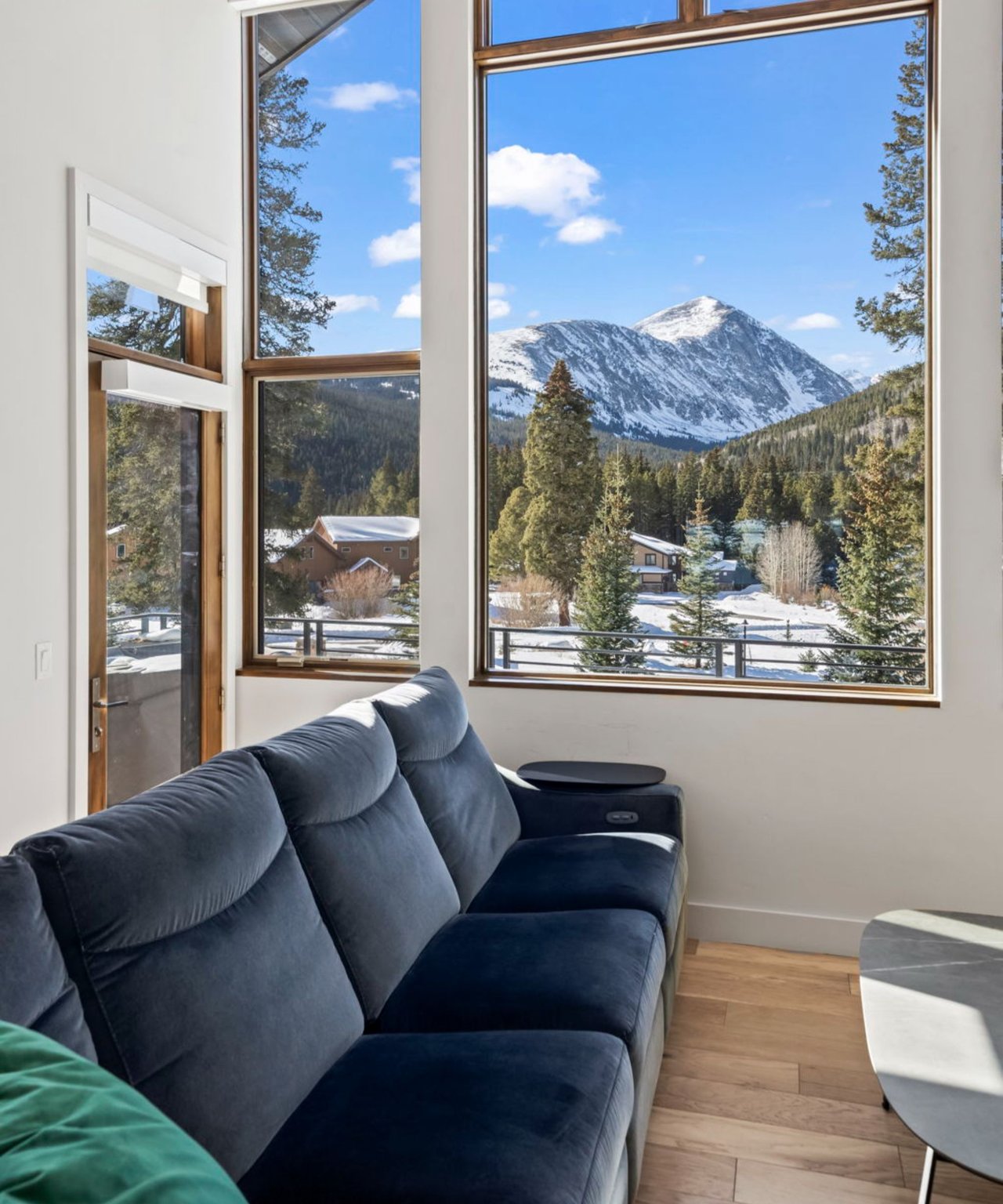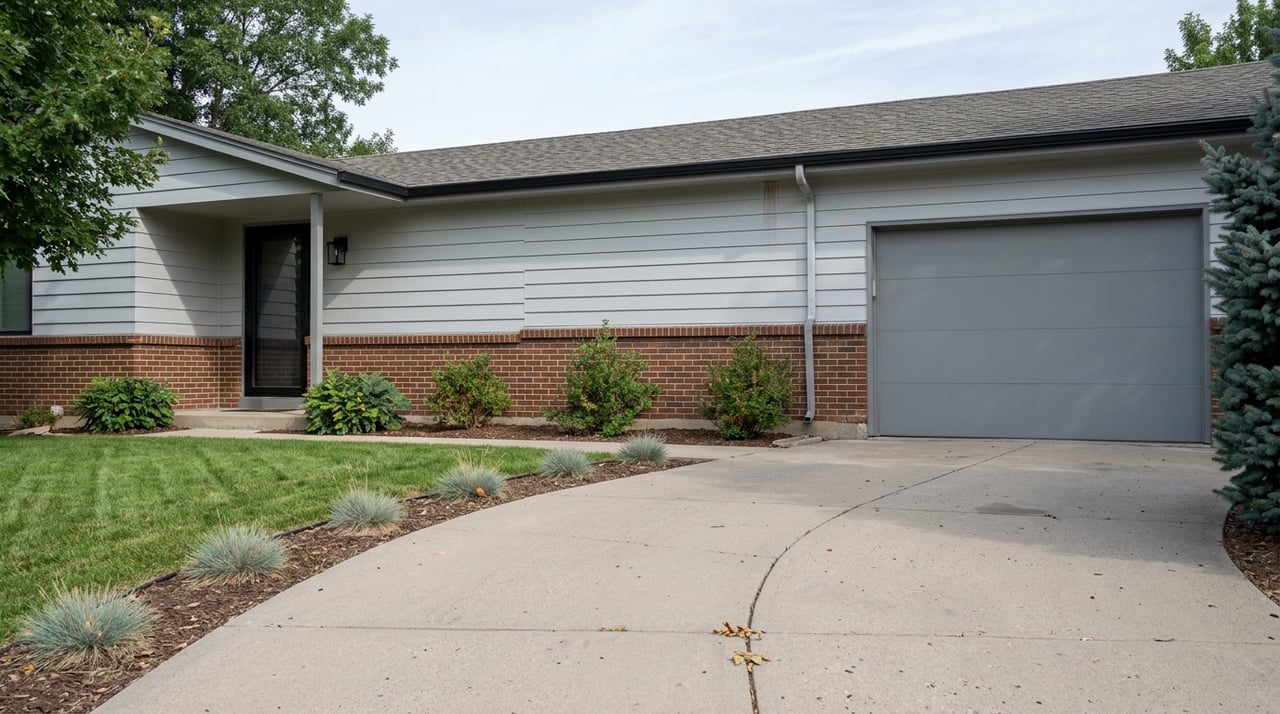
Pull up two Longmont listings priced within a few thousand dollars of each other this summer and you can end up looking at two entirely different houses. One is a three-bedroom bungalow built when the town was still mostly farmland, a block from the Dickens Opera House. The other is a two-story built within the last decade, roughly a thousand square feet larger, backed up to a neighborhood park with an HOA that mows the common areas. Same price. Different math entirely.
That gap is the part the citywide median never explains. Portals put Longmont's headline number somewhere between $555,000 and $600,000 this summer, depending on which tracker and which month you check. Redfin's trailing three-month figure through May 2026 landed at $555,000, down 2.0% from the same period a year earlier, while a separate May 2026 sold-price snapshot put the figure closer to $600,000. Neither is wrong. They're measuring slightly different windows and slightly different slices of the market. What they agree on is the range, and the range is wide enough that a buyer anchoring to a single number is already off before they've toured a single house.
Once you drop below that citywide figure into specific neighborhoods, the picture sharpens, and a pattern shows up that most buyers don't expect: the sticker price tells you almost nothing about what you're actually purchasing, and the market is giving up less ground on price than the inventory numbers suggest it should.
Same Price, Very Different Square Footage
Old Town is where this shows up first. Homes there are historic by Longmont standards, typically 1,300 to 2,000 square feet with three bedrooms and two bathrooms, clustered on tree-lined streets around the neighborhood's original commercial core. Local buyer's guides put the price range anywhere from roughly $400,000 to $680,000, depending on the source and how recently it was updated. Residents can walk to shops and restaurants without leaving the neighborhood, and the Dickens Opera House still anchors the district as a functioning landmark rather than a museum piece.
Renaissance tells a different story at a similar headline price. The neighborhood sits between Clover Basin Drive and Pike Road, just north of the Diagonal Highway, and carries a median price around $510,000, working out to roughly $250 per square foot. But the homes themselves run much larger, from about 1,200 up to 3,700 square feet, with two to six bedrooms and as many as five bathrooms across multi-level floor plans built under an active HOA. Yellow Park sits at the center of the subdivision with a playground and open fields, and Blue Skies Park is a short drive away.
Do the arithmetic and the tension becomes obvious. A buyer paying $550,000 in Old Town for a 1,700-square-foot home is somewhere in the neighborhood of $320 per square foot. A buyer paying roughly the same amount in Renaissance for 2,200 square feet is closer to $250. The Old Town buyer isn't overpaying. They're buying walkability, history, and proximity to downtown that the square-footage math doesn't capture. But if you're comparing the two homes purely on their list prices, as most portal searches encourage you to do, you'd never see the trade you're actually making.
The Scarcity Premium in Prospect
Prospect, Longmont's New Urbanist-style neighborhood near downtown, complicates the picture further. It mixes loft-style condos with contemporary single-family homes on walkable blocks close to shops and an easy commute toward Boulder. One local listing tracker described it plainly this summer: at any given time, there are usually just a handful of homes for sale in the entire neighborhood. One estimate places the broader Northeast Longmont band that includes Prospect and Quail Crossing between roughly $520,000 and $680,000.
That scarcity changes how a buyer should approach the search. In a neighborhood with dozens of active listings, you can afford to wait for the right layout or lot. In a neighborhood where only a handful of homes trade at once, waiting means watching the same three or four listings cycle through instead of seeing new options appear. Buyers targeting Prospect specifically should expect a longer overall search timeline even though the neighborhood is small, because low turnover, not low demand, is what's limiting the pool.
A Quick Comparison
| Neighborhood | Typical Price Range | Typical Size | What Sets It Apart |
|---|---|---|---|
| Old Town | roughly $400,000–$680,000 | 1,300–2,000 sq ft | Historic homes, walkable core, Dickens Opera House |
| Prospect | roughly $520,000–$680,000 | Mixed condos and single-family | Walkable New Urbanist design, very limited turnover |
| Renaissance | median near $510,000 | 1,200–3,700 sq ft | HOA-managed, newer multi-level homes, Yellow Park |
Why Sellers Aren't Budging Even With More Homes on the Market
Here's the part that runs against the obvious story. Longmont hit what one local market update through June 2026 called record inventory for the year, with roughly 300 single-family homes listed at the end of that month. Basic supply-and-demand logic says more inventory should mean bigger discounts for buyers. It hasn't worked out that way.
From April through June 2026, Longmont single-family homes sold at a median of only about 1% under list price. Over a similar stretch, buyers in the city of Boulder and unincorporated Boulder County were securing average price reductions closer to 2.3%, more than double Longmont's gap. Pending sales at the end of June were also up 5% from May and 13% from a year earlier, meaning buyers were still stepping up to absorb new listings almost as fast as they appeared.
The explanation isn't that Longmont sellers are tougher negotiators. It's that Longmont's price band pulls from a much larger pool of qualified buyers than Boulder's does. When a home is priced in the high $500,000s instead of the high $800,000s or above, more households can realistically finance it, so even a record-inventory month gets absorbed quickly instead of piling up into a buyer's market. More homes on the shelf doesn't help you much as a buyer if the number of people who can afford to shop that shelf grows just as fast.
Days on market figures reflect the same tension from a different angle, and the spread across sources is wide enough to be worth naming rather than smoothing over. A trailing three-month figure through May 2026 put the average at 41 days. A different April 2026 snapshot put it at 50.5 days. By July 2026, one tracker had it as high as 63 days. Part of that spread is methodology. Part of it is simply that days on market tends to climb as the year moves from spring into fall, which matches what a local market update from earlier this summer flagged directly: expect the number to keep rising through the back half of the year.
The Financing Quirk Boulder County Buyers Rarely Escape
One detail that rarely shows up in a portal search bar: Boulder County carries one of the highest conforming loan limits in the country, set well above the national baseline because it's classified as a high-cost county. Local lender estimates for the 2026 figure vary, with some putting it near $880,000 and others closer to $1.09 million, depending on when the estimate was published.
Either number sits far above what nearly every home in Old Town, Prospect, or Renaissance actually sells for. That means a Longmont buyer almost never has to think about jumbo financing, the appraisal requirements that come with it, or the slightly higher rates jumbo loans often carry. Compare that to the city of Boulder itself, where the median sale price over the three months ending May 2026 was $854,000, down 14.5% year over year, and plenty of individual listings still clear seven figures without much trouble. The same county-level loan limit that barely registers for a Longmont purchase is a real consideration for a comparable Boulder one.
What This Means If You're Comparing Neighborhoods This Fall
The practical takeaway isn't which Longmont neighborhood is "best." It's that the neighborhood you choose answers a different question than the price tag suggests. Old Town trades square footage for walkability and history. Renaissance trades character for space and predictability. Prospect trades both against a very small pool of available homes at any given moment. None of that shows up in a citywide median, and none of it shows up if you're filtering a portal search by price alone.
If you're actively comparing these pockets of Longmont, the more useful exercise is deciding what you're actually optimizing for, whether that's square footage per dollar, walking distance to downtown, or simply not competing against six other buyers for the same handful of listings, and then pricing neighborhoods against that priority instead of against each other's medians.
A Few Common Questions
Is Longmont uniformly cheaper than Boulder? On a citywide median basis, yes, by a wide margin. But specific Longmont pockets like Prospect can price close to entry-level Boulder neighborhoods once you account for size and finish level, so the gap narrows or widens depending on which parts of each city you're comparing.
Will I need a jumbo loan to buy in Longmont? Almost never. Boulder County's conforming loan limit sits well above typical Longmont prices in every neighborhood covered here, so most buyers stay within standard conventional financing even at the higher end of the local price range.
Which Longmont neighborhood moves fastest right now? That shifts month to month, and the spread in reported days-on-market figures this year has been wide enough that a single citywide number isn't reliable for any one pocket. The more useful step is pulling current listing activity for the specific neighborhood you're targeting rather than relying on a citywide average.
Comparing Longmont neighborhoods against each other, rather than against a single median, is exactly the kind of groundwork that makes an offer decision easier once you find the right house. If you want that comparison run against current listings in Old Town, Prospect, Renaissance, or elsewhere in Longmont, the Patrick Dolan Team can walk through it with you. What's my home worth?